
Confused about choosing the right label material for your product? Discover expert tips from Kartik Shah, Owner of Winways Digitech, to select labels that improve durability, branding, and performance.
In today’s competitive business environment, product labels do much more than display a brand name. They communicate product information, support compliance, improve inventory management, and influence customer perception.
Yet, many startups and small businesses struggle to choose the right label material for their products. Selecting the wrong material can lead to fading, peeling, poor barcode scanning, and damaged packaging, all of which impact brand credibility and operational efficiency.
According to Kartik Shah, Owner of Winways Digitech, choosing the right label material is one of the most important decisions businesses can make for long-term product performance.
Why the Right Label Material Matters
Every product has unique storage, transportation, and usage conditions. Labels exposed to heat, moisture, chemicals, refrigeration, or rough handling require specialized materials that can withstand environmental challenges.
The right label material not only ensures durability but also improves product presentation, barcode readability, and customer trust.
Understand Your Product Environment
Before selecting a label material, businesses should evaluate where and how the product will be used.
Questions to Consider:
- Will the product be exposed to moisture or heat?
- Is the packaging stored in cold environments?
- Will the label face friction during transportation?
- Does the product require long-term barcode readability?
Understanding these factors helps businesses avoid premature label damage and printing issues.
Choose the Right Label Type
Different products require different labeling solutions.
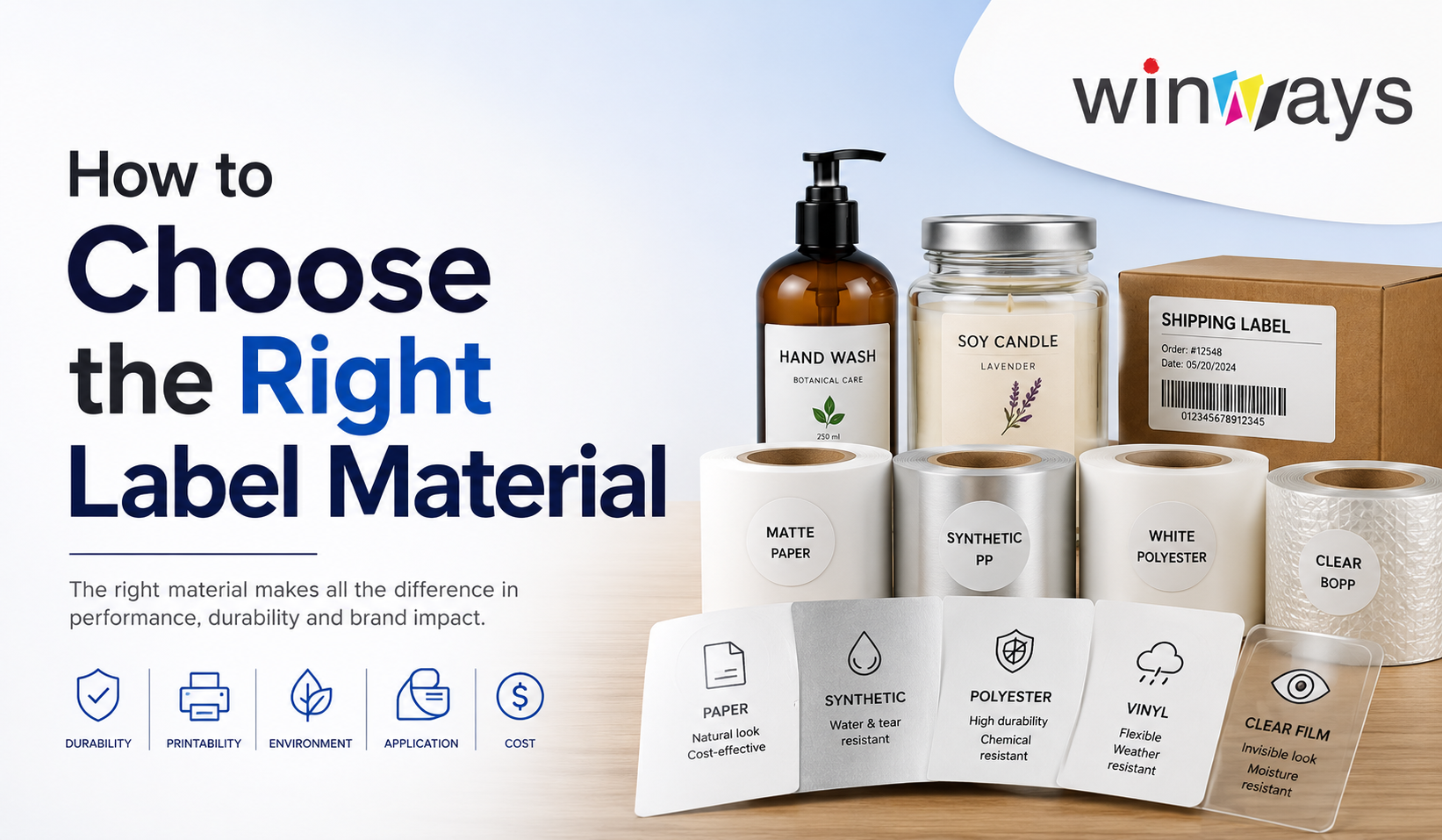
Paper Labels
Ideal for short-term applications and cost-effective packaging. Best suited for products with limited environmental exposure.
Polyester Labels
Highly durable and resistant to heat, moisture, and chemicals. Commonly used in electronics, industrial packaging, and asset labeling.
Polypropylene Labels
Suitable for food, beverage, cosmetic, and retail packaging where moisture resistance and premium appearance are important.
Don’t Ignore Print Technology
Even the best label material can fail if paired with poor printing methods.
Thermal Transfer Printing
Thermal transfer labels offer excellent durability and are ideal for barcode labels, logistics, and industrial applications.
Direct Thermal Printing
Suitable for short-term applications such as shipping labels and receipts.
Balance Branding with Functionality
Many businesses focus only on aesthetics while selecting labels. However, functionality is equally important.
A label should be visually appealing while maintaining readability, adhesion strength, and scanning accuracy.
As Kartik Shah explains, “The right label material protects your brand reputation while improving operational efficiency and product reliability.”
Choosing the right label material is not just a packaging decision, it is a business investment. The correct labeling solution can improve product durability, strengthen branding, streamline operations, and enhance customer experience.
Whether you need barcode labels, transfer labels, or customized labeling expertise, selecting the right partner is equally important.
Connect with Winways Digitech for customized barcode labels, RFID labels, thermal transfer labels, and complete labeling solutions tailored for startups and growing businesses.
Top FAQs
1. What is the best label material for waterproof products?
Polypropylene and polyester labels are commonly used for waterproof and moisture-resistant applications.
2. Which label material is best for barcode printing?
Thermal transfer-compatible materials such as polyester and polypropylene are ideal for long-lasting barcode readability.
3. Are RFID labels suitable for small businesses?
Yes, RFID labels help small businesses improve inventory tracking, warehouse management, and operational efficiency.
4. How do I know if I need thermal transfer labels?
If your labels require long-term durability, resistance to heat, or industrial usage, thermal transfer labels are recommended.
5. Why is choosing the right label material important?
The right label material improves product durability, enhances branding, ensures compliance, and prevents operational issues.