
Not sure what your product label should include? Kartik Shah, Owner of Winways Digitech gives expert tips on essential details every business must add for compliance, branding, and customer trust in a conversation with Priyanka Parshurami.
In today’s competitive market, a product label is far more than just a sticker on packaging. It serves as a communication tool between your brand and your customer. While also supporting compliance, traceability, and operational efficiency.
For startups and small businesses, creating an effective product label is essential for building trust and ensuring smooth product management. Missing or unclear information can lead to customer confusion, compliance issues, and even damage brand credibility.
According to Kartik Shah, Owner of Winways Digitech, businesses should treat product labels as an important extension of their brand identity and operational strategy.
Why a Product Label Matters
A well-designed product label helps customers quickly understand what the product is. How to use it. And whether it meets their needs. At the same time, labels help businesses manage inventory, improve barcode scanning, and maintain regulatory compliance.
Whether you are selling retail goods, food products, cosmetics, pharmaceuticals, or industrial products, your product label should always be informative, readable, and durable.
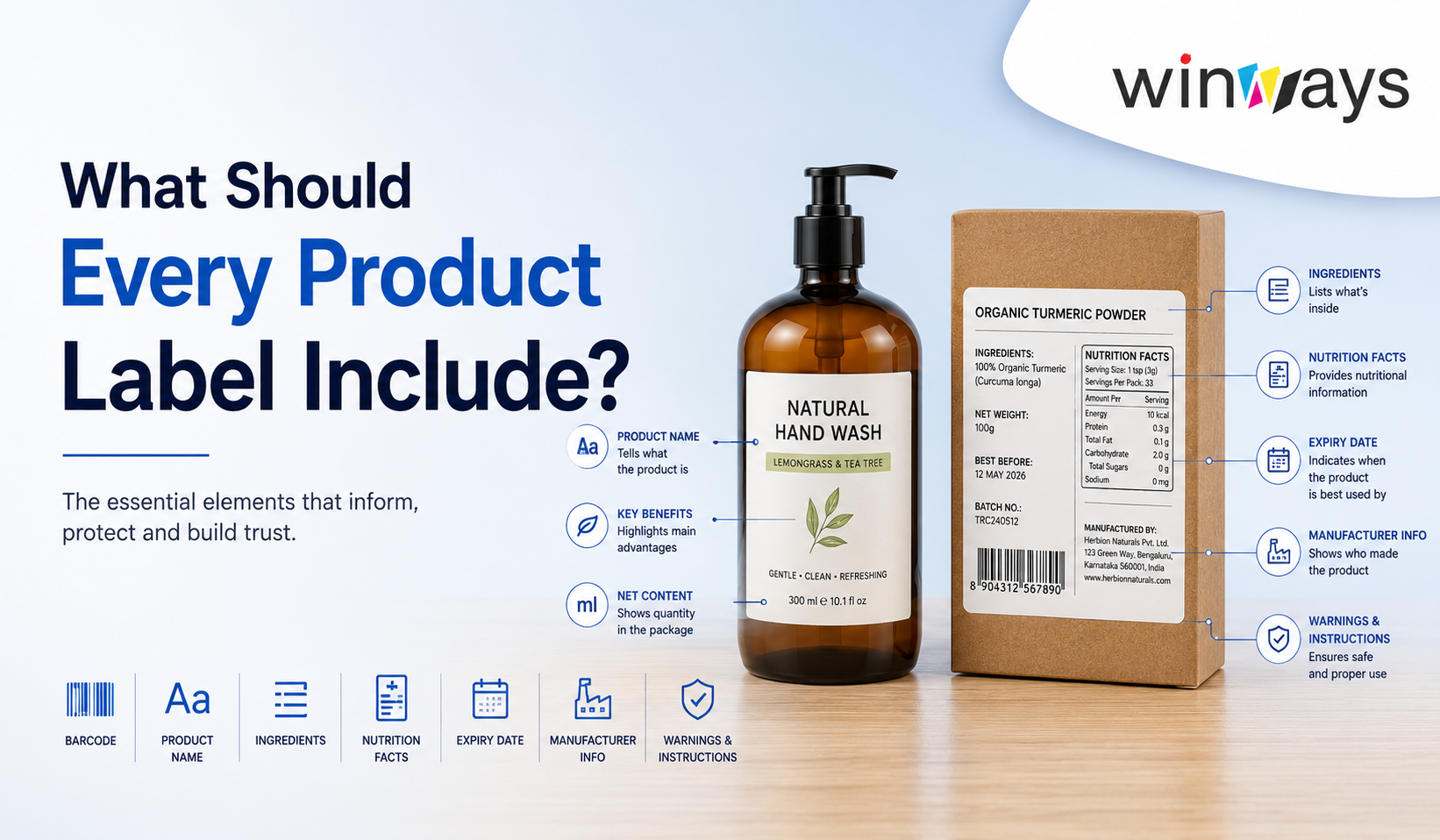
Essential Information Every Product Label Should Include
1. Product Name: The product name should be clearly visible and easy to read. This is often the first thing customers notice while browsing shelves or online listings.
2. Brand Name and Logo: Your brand identity helps customers recognize and trust your product. A strong logo and consistent branding improve recall value and professionalism.
3. Barcode or QR Code: Barcodes are essential for inventory tracking, billing, warehouse management, and retail operations. Using high-quality barcode labels ensures better scanning accuracy and operational efficiency.
4. Manufacturing and Expiry Dates: Products such as food, cosmetics, healthcare items, and chemicals require manufacturing and expiry information for safety and compliance purposes.
5. Batch or Lot Number: Batch numbers help businesses track production quality and simplify product recalls if necessary.
6. Ingredients or Product Specifications: Customers expect transparency regarding ingredients, materials, dimensions, or technical specifications. Providing accurate details helps improve customer confidence and purchasing decisions.
7. Usage Instructions: Clear instructions help customers use the product correctly and safely.
8. Compliance and Safety Information: Depending on the industry, labels may require certifications, warnings, recycling symbols, or government-mandated information.
Don’t Ignore Label Durability
Even if your product label contains all the right information, poor material quality can reduce readability and damage brand perception.
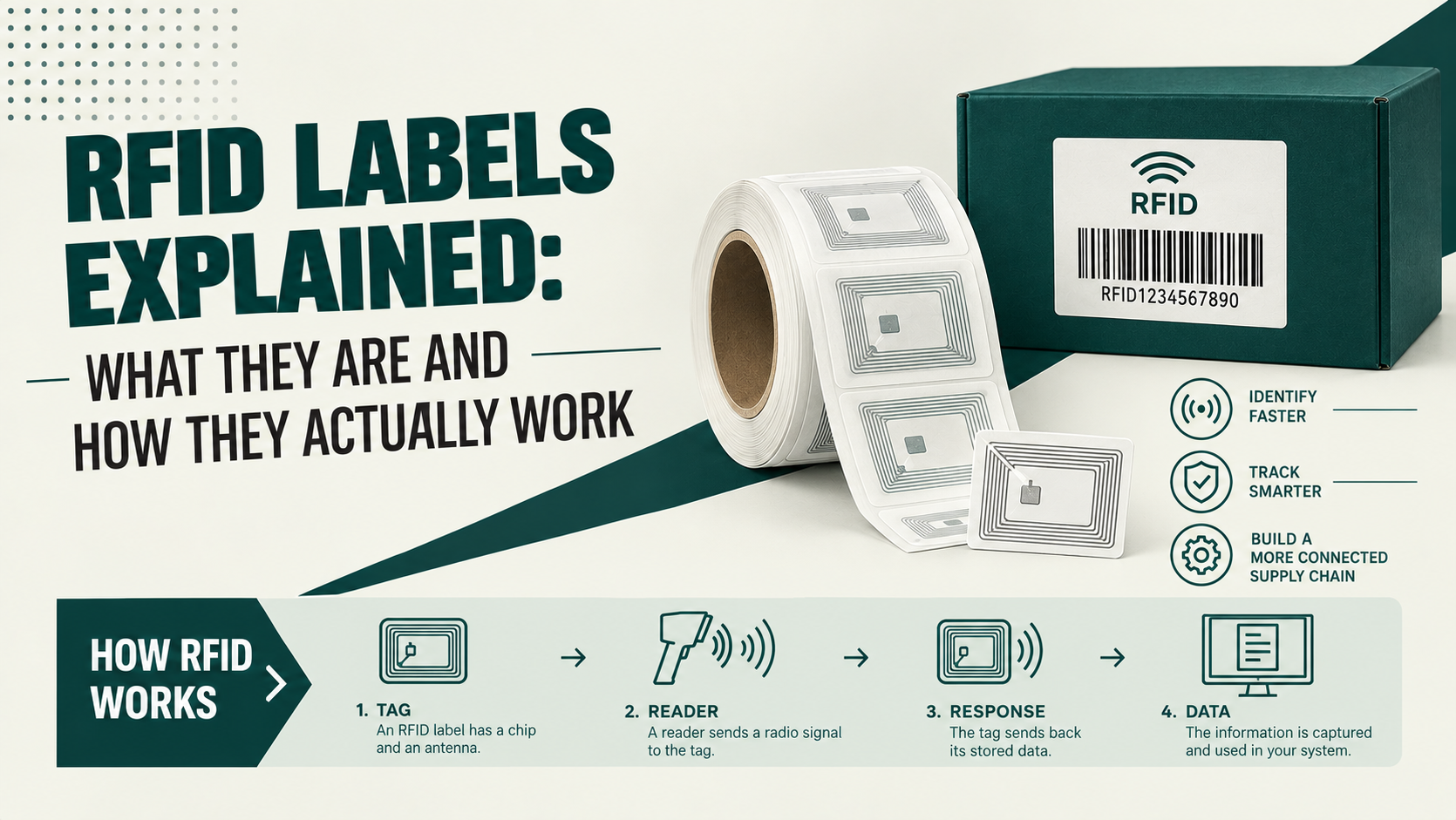
Choosing durable barcode labels, RFID labels, and thermal transfer labels ensures long-term performance across storage and transportation environments.
As Kartik Shah explains, “A product label should not only look professional but also deliver accurate information consistently throughout the product lifecycle.”
A professionally designed product label helps businesses improve customer trust, operational efficiency, compliance, and overall brand value.
For startups and growing businesses, investing in the right labeling solutions today can prevent operational challenges tomorrow.
Connect with Winways Digitech for expert guidance on barcode labels, thermal transfer labels, and complete labeling solutions designed for startups and small businesses.
FAQs
1. Why is a product label important?
A product label helps communicate product details, improve branding, support compliance, and streamline inventory management.
2. What information is legally required on a product label?
Requirements vary by industry but typically include product name, manufacturing details, expiry dates, batch number, and safety information.
3. Why are barcodes important on product labels?
Barcodes improve inventory tracking, billing accuracy, and warehouse efficiency.
4. What type of label is best for long-term durability?
Thermal transfer labels, polyester labels, and RFID labels offer excellent durability and resistance.
5. How can startups improve their product labels?
Startups should focus on readability, compliance, branding consistency, and durable label materials.