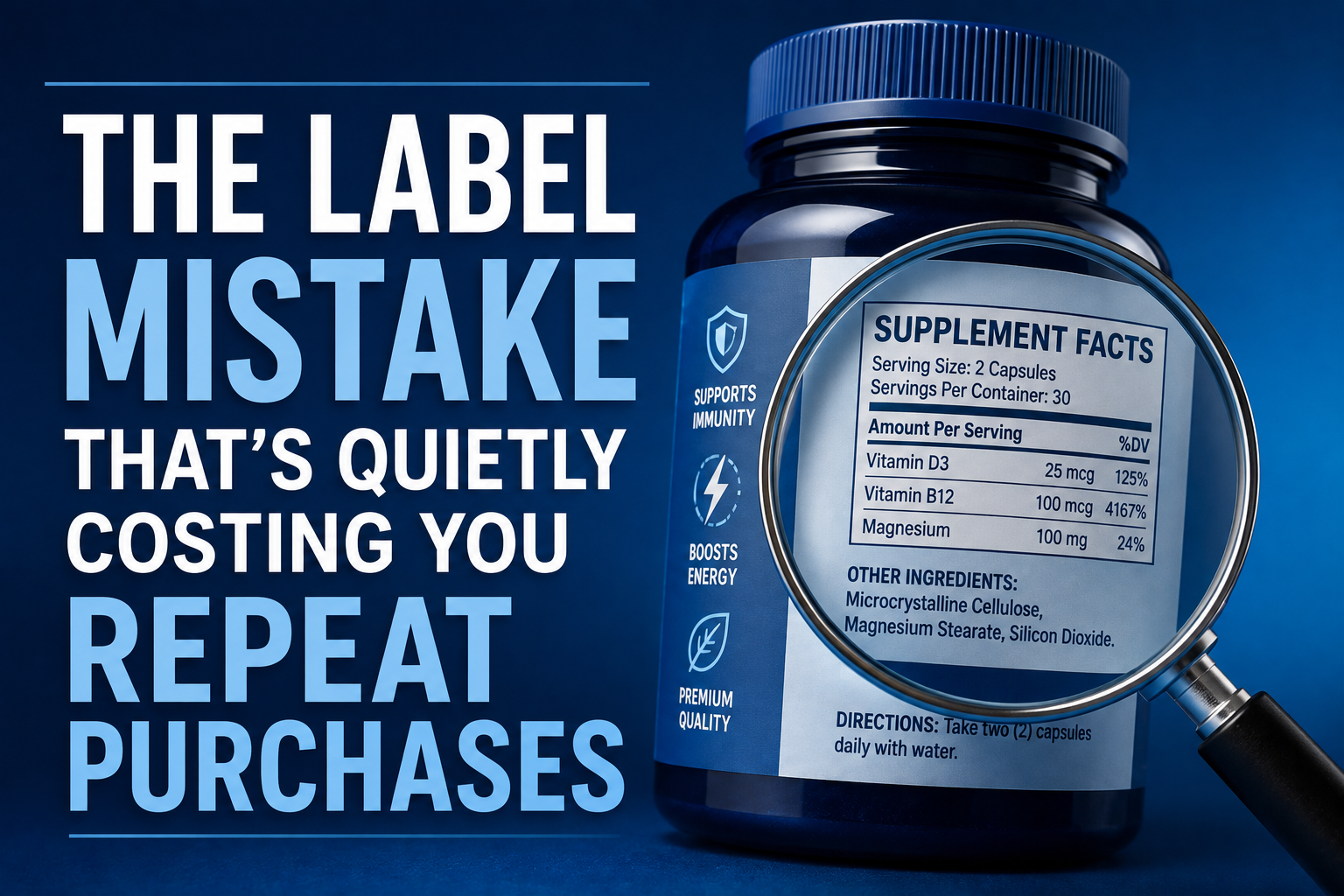

Most brands design a label for one moment. The shelf, or the product photo, or the first three seconds someone sees it online. That moment matters, but it is not the moment that decides whether someone buys again. The moment that decides a repeat purchase is much later. It is the last time they look at the label before the product runs out, not the first. And that is exactly the moment most labels are never tested for. Here are some label mistakes that are quietly costing you repeat purchases
The Label Someone Sees on Day One Is Not the Label They Remember
A label leaves the factory looking perfect. By the time a product is halfway used, it has been through handling, humidity, sunlight near a window, and a few weeks in a bag or on a shelf at home. Gloss can dull. Matte can pick up fingerprints and smudges. Edges can start to lift where the adhesive was never tested for that much handling. None of this shows up in a factory sample or a product photo. It shows up weeks later, in the customer’s hand, right around the time they are deciding whether to buy the product again. That worn-out label is the last impression before the repurchase decision, not the shiny first one.
Batch-to-Batch Colour Drift Reads as a Red Flag
A returning customer has a mental picture of what your product looks like. If a reorder arrives with a label that is a shade off, slightly warmer, slightly more saturated, slightly different in finish, that mismatch registers immediately, even if the customer cannot explain why something feels off. In categories like cosmetics and food, where trust is already fragile, colour drift between print runs can quietly plant doubt about whether the product is genuine. This is rarely a design problem. It is a print consistency problem, caused by inconsistent colour calibration between runs, and it is one of the most avoidable mistakes on this list.
A Barcode That Stops Scanning Costs You the Reorder Itself
Barcodes and QR codes wear down the same way any printed element does. A barcode that scans perfectly on day one can become unreadable after enough handling, especially on products that get carried around, like personal care items or supplements. If that same code is tied to a loyalty program, a reorder link, or point-of-sale scanning at a retail counter, a worn-out code does not just look bad. It actively blocks the exact action a repeat customer is trying to take. This is a case where a small print detail sits directly in the path of revenue, not just brand perception.
Testing for the Whole Life of the Label, Not Just the Shelf Moment
The fix is straightforward, but it requires testing at both ends of the product’s life, not just the beginning. That means checking how a label performs after real handling, not just after printing. It means locking a consistent colour standard across print runs, so a reorder looks identical to the first purchase, not just close. It means testing barcodes and QR codes for scan reliability after wear, not only on a fresh sample. None of this is expensive to fix. It is expensive to ignore, since the cost shows up quietly, as a customer who does not come back and never tells you why.
The Real Question to Ask Before Approving a Label
Most label approvals stop at one question: does this look good right now? The better question is what this label will look like in someone’s hand a month from now, right before they decide whether to buy the product again. A label that only performs on day one is only doing half its job. The other half happens quietly, in the background, at exactly the moment that decides whether a first purchase becomes a habit.
FAQs
Does label quality actually affect whether customers buy again?
Yes. The label a customer sees just before repurchasing, often worn or faded from handling, shapes their impression as much as the label they saw on shelf. A label that degrades quickly can quietly undercut trust even when the product itself performs well.
Why does a reordered product sometimes look like a slightly different colour?
This usually comes from inconsistent colour calibration between print runs, not a design change. Without a locked colour standard, small shifts in ink mixing or press settings can make a reorder look noticeably different from the original, even when nothing was intentionally changed.
How can a brand test if a label will hold up through the product’s full use?
Test the label after simulated real-world handling, not just straight off the press. This includes checking for fading, edge lifting, and smudging after repeated contact, along with confirming barcodes and QR codes still scan reliably after wear.
Can a peeling or faded label hurt a brand even if the product itself is fine?
Yes. Customers often cannot separate the product experience from the packaging experience. A label that looks worn or damaged can create an impression of poor quality, even when the product performed exactly as expected.