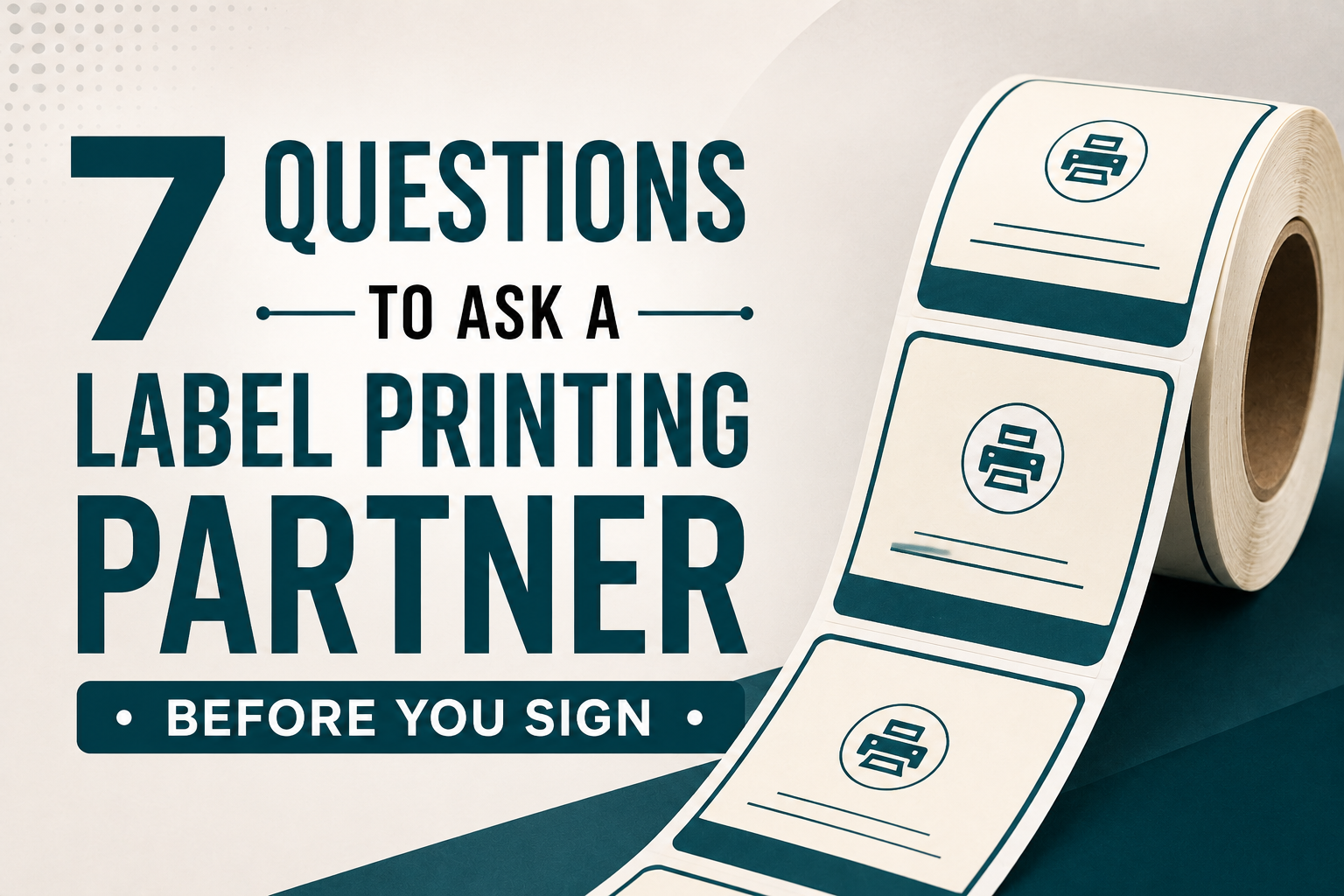

Choosing a label printer is not a one-time price comparison. It is closer to choosing a manufacturing partner, since a bad fit does not show up on day one. It shows up three months later, as a shade mismatch on a reorder. Also, it can show up as a batch that peels off in transit, or a compliance detail nobody flagged before printing. Most of these problems are avoidable, but only if you ask the right questions before signing, not after the first bad batch arrives. Here are seven questions to ask a label printing partner that actually reveal how a printing partner will perform once the relationship gets real.
1. What Is Your MOQ, and Does It Change With SKU Count?
A minimum order quantity is easy to quote for a single design. It gets more complicated once a brand has five or six SKUs, each needing its own print run below the standard MOQ. Ask specifically how MOQ works across a product line, not just for one label. A printer that only quotes a low MOQ for a single design but forces a much higher combined minimum across variants is not actually solving the small-batch problem a growing brand usually has.
2. Can You Show Proof of Colour Consistency Across Separate Print Runs?
This is the question most brands skip, and it is one of the most important ones. Ask to see two batches of the same label, printed months apart, side by side. A printer with proper colour calibration and standards in place can show this without hesitation. One that cannot, or gives a vague answer about how colour can vary a little, is telling you that your reorders may not match your original packaging. This is a real risk for repeat customers who notice inconsistency.
3. What Testing Do You Do for My Product’s Actual Environment?
A label that performs on a dry shelf can fail completely on a refrigerated bottle or an oily container. Ask whether the printer tests materials and adhesives against the specific conditions your product will face. They should not just test for general durability claims. A label printing partner must ask you detailed questions back. They should question about storage temperature, moisture exposure, or handling conditions.
4. What Happens If a Compliance Detail Changes Mid-Production?
Regulations on food, cosmetic, and pharma labels change more often than most brands expect. Ask how the printer handles a situation where a regulatory update lands between order confirmation and delivery. A good partner flags this proactively and has a clear process for updating artwork before printing. A partner who has no answer for this question is one you will likely need to manage compliance for yourself, even after paying for a finished product.
5. Do You Handle Regulatory Label Requirements, or Is That on Me?
Some printers only execute the artwork they are given. Others actively check mandatory declarations, font sizing rules, and format requirements before a job goes to print. This is worth clarifying upfront, since assuming a printer will catch a compliance gap, when their actual role is just production, is how non-compliant labels end up on shelves in the first place.
6. What Is Your Policy if Labels Fail After Delivery?
Ask this before you need it, not after. A label that peels, fades, or misprints after it reaches you is a shared risk between brand and printer, and a serious partner will have a clear reprint or credit policy already defined. A vague answer here, or one that shifts all responsibility onto “how it was applied,” is worth treating as a warning sign.
7. Can You Scale From a Small Batch to a Bulk Reorder Without a Quality Drop?
A printer that handles a small first order well is not automatically equipped to handle the same brand’s tenth reorder at ten times the volume. Ask directly how the process, the equipment, and the quality checks change as order size grows. The answer tells you whether this is a partner you can grow with, or one you will need to replace the moment your order sizes actually increase.
The Real Test Is How These Questions Get Answered
The specific answers matter less than how directly they are given. A label printing partner that answers all seven questions clearly, with real detail rather than reassurance, is one that has clearly been through these problems before and built a process around them. That is a far better signal than any price quote.
FAQs
What is a reasonable MOQ for label printing in India?
This varies by printer and technology. But digital printing generally supports far lower minimums than traditional flexo printing. It makes it a better fit for small-batch or multi-SKU brands. Always ask how MOQ applies across a full product line, not just one design.
How can I check if a label printer maintains colour consistency across orders?
Ask to see samples from two separate print runs of the same label, ideally months apart. You must compare them side by side. A printer using proper colour calibration standards should be able to produce this comparison without difficulty.
Should a label printing partner handle regulatory compliance for me?
It depends on the printer, and it is worth confirming directly. Some printers only execute approved artwork, while others actively check mandatory declarations and formatting rules before printing. Clarify this upfront rather than assuming either way.
What is a normal turnaround time for label printing?
Turnaround depends on order size, print method, and finishing requirements. A reliable partner should give a clear timeline upfront and flag delays early, rather than leaving a brand to guess during a production run.