
Most brands choose a label finish by eye. They look at a sample under bright store lighting and pick whichever one looks nicer. That is a reasonable first instinct, but it skips a big part of the decision. Finish is not just how a label looks. It changes how a label reads under different lighting, how it holds up to handling, and how it feels in someone’s hand before they even read the copy. Here is what matte, gloss, or textured finishes actually do, and where each one earns its place.
Gloss: Built to Catch the Eye First
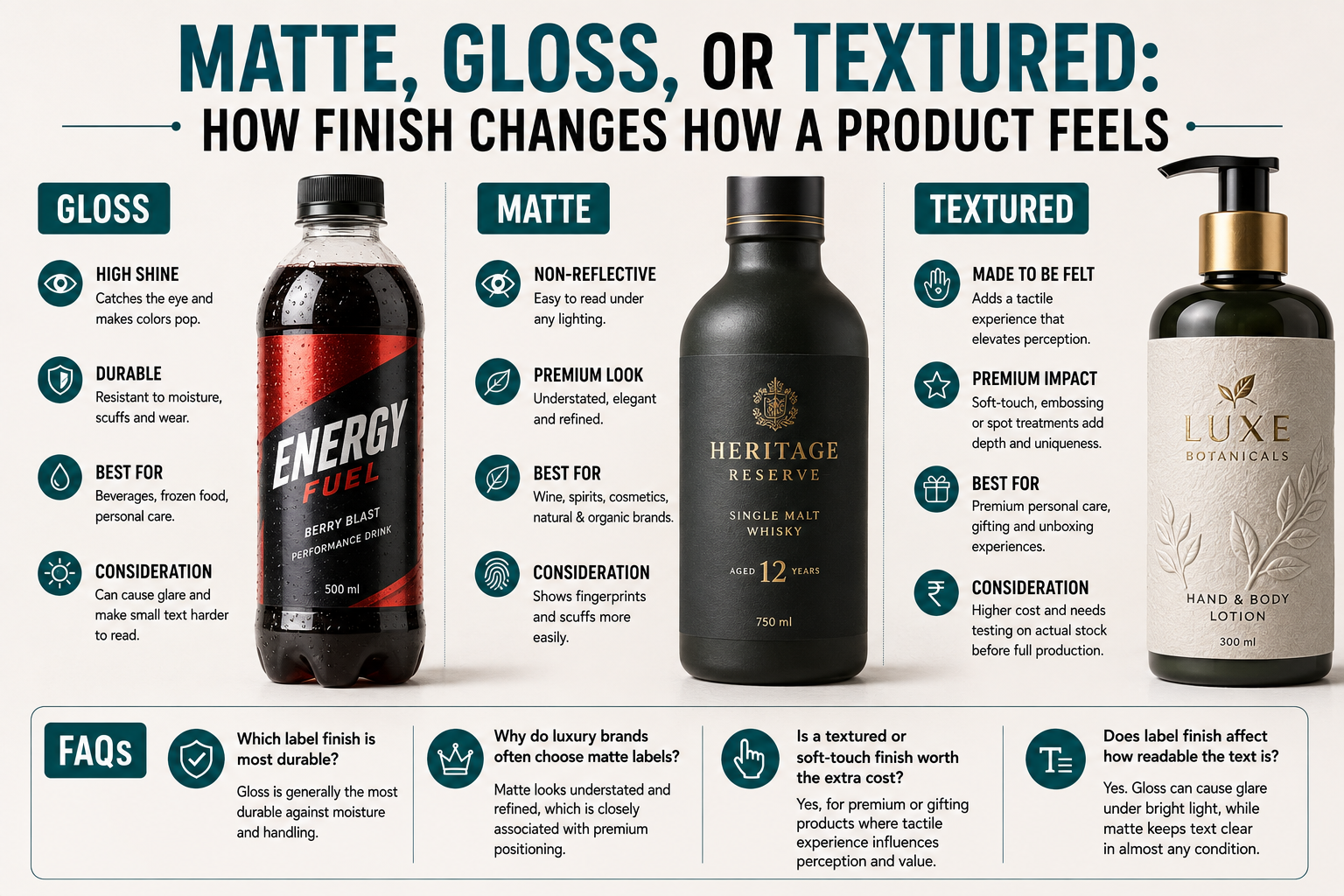
A gloss finish comes from a laminate or varnish layer applied over the printed label. That layer reflects light directly, which is what gives gloss its shine. Colours look deeper. Reds look richer. Blacks look sharper. This is why gloss is the default choice for products competing hard for shelf attention, especially in bright retail lighting where a flat finish can look dull by comparison.
Gloss also brings a real functional benefit. The laminate adds a protective layer, which makes gloss labels more resistant to moisture, scuffing, and general wear.
That combination of visual punch and physical protection is why gloss shows up so often on beverages, frozen food, and personal care products stored in humid spaces like bathrooms. The trade-off is glare. Under harsh lighting, a gloss surface can reflect light back at the viewer hard enough to make small text difficult to read.
Matte: Built to Hold Attention, Not Just Grab It
A matte finish diffuses light instead of reflecting it. That is why matte labels look flat and non-reflective, and it is also why they solve the glare problem gloss creates. Text stays easy to read under almost any lighting. Colours look softer and less saturated than gloss, which is not a flaw, it is the point. That muted look reads as understated and premium, which is exactly why matte is the standard choice for wine, spirits, and high-end cosmetics.
Matte also carries a strong association with natural and organic positioning, since the non-reflective surface feels closer to raw material than to plastic shine.
The trade-off is durability. Matte’s protective coating is typically thinner than gloss laminate, so matte labels show fingerprints, scuffs, and shipping marks more easily than gloss ones do.
Textured: Built to Be Felt, Not Just Seen
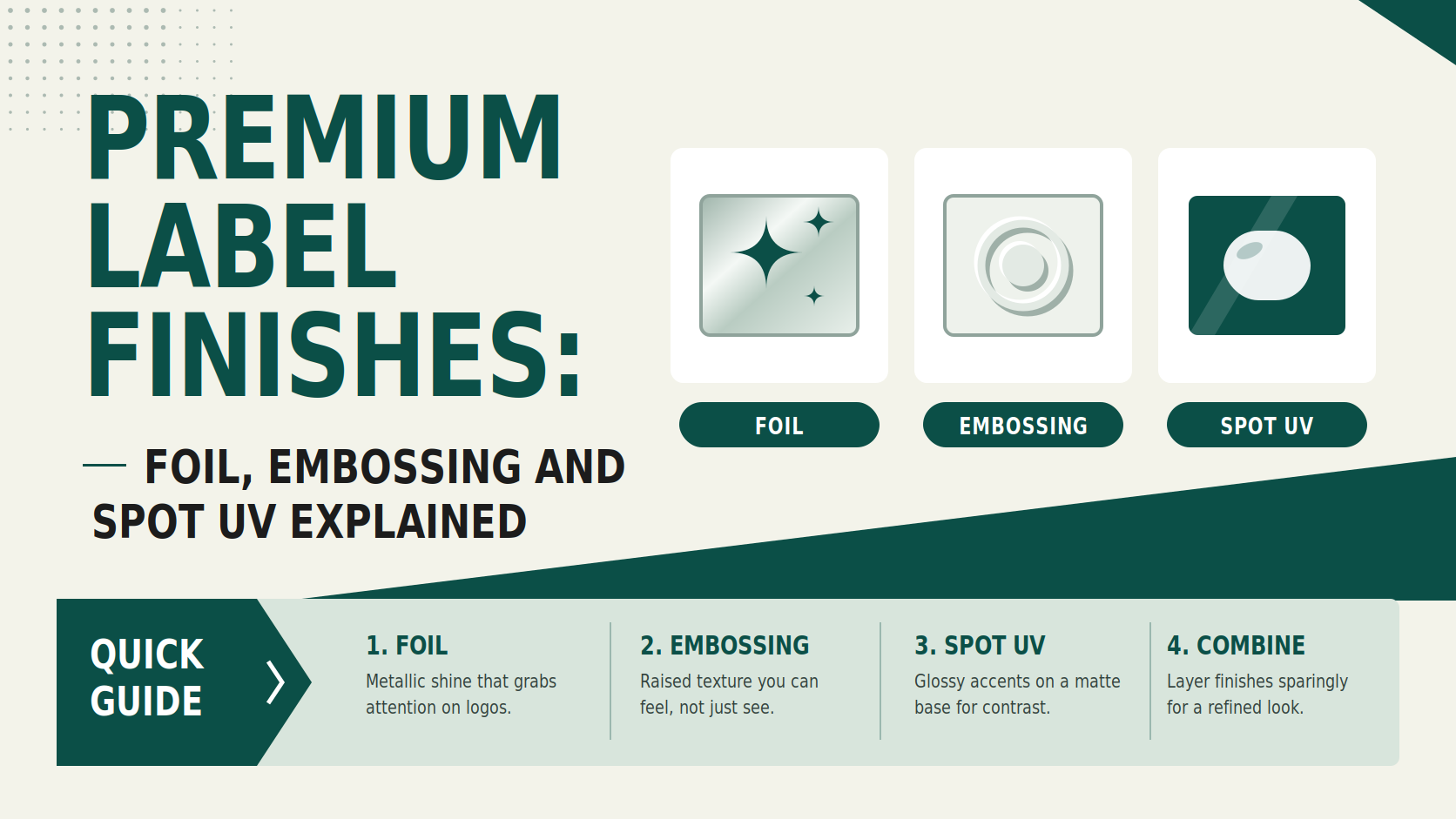
Textured finishes go a step further than matte or gloss. This category includes soft-touch laminate, which adds a velvety feel to the surface, along with embossing, debossing, and spot treatments that raise or press specific parts of the design. The goal here is tactile, not just visual. A soft-touch label makes a product feel more expensive the moment someone picks it up, before they have read a single word on it. Embossed logos or raised text add a layer of craftsmanship that flat printing cannot fake.
This finish category costs more to produce than standard matte or gloss, and it needs testing on the actual label stock before a full production run, since raised or soft-touch surfaces can behave differently during application and shipping.
Textured finishes work best on premium personal care, gifting products, and any brand where the unboxing moment matters as much as the shelf moment.
Matching Finish to Function, Not Just Taste
The right finish depends on three things. What lighting will the product sit under. What handling will it face after it leaves the shelf. And what feeling the brand wants someone to have in the first three seconds of contact.
A product built for grocery store shelves under bright fluorescent light benefits from gloss, both for shelf appeal and for moisture resistance.
A product built around restraint and craft, like a spirit or a serum, benefits from matte, since the muted look does more to signal quality than shine would.
A product built to be gifted or unboxed benefits from texture, since that is the finish people remember touching.
None of these choices is purely aesthetic. Each one is also a decision about how the label will actually perform once it leaves the design file.
FAQs
Which label finish is most durable?
Gloss is generally the most durable against moisture and general handling, since its laminate layer adds real physical protection. Matte finishes use a thinner coating, so they show scuffs and fingerprints more easily over time.
Why do luxury brands often choose matte labels?
Matte finishes reduce glare and soften colour saturation, which reads as understated and refined rather than loud. That muted look is closely associated with premium positioning, which is why wine, spirits, and high-end cosmetics lean toward matte so often.
Is a textured or soft-touch finish worth the extra cost?
It depends on the product. For gifting items or premium personal care, the tactile impression a soft-touch or embossed finish creates can genuinely shape how a product is perceived. For everyday or budget-positioned products, the extra cost rarely pays back in the same way.
Does label finish affect how readable the text is?
Yes. Gloss finishes can create glare under bright lighting, which makes small text harder to read at certain angles. Matte finishes diffuse light instead of reflecting it, which keeps text legible under almost any lighting condition.