
A product label, commonly considered just a piece of print, is an effective tool to promote your brand, express your message, communicate key information, and influence purchase decisions. The right label enhances your product’s appearance, resists its environment, and complies with industry regulations.
With so many options available, choosing the right label can be daunting. These are the important things that every business must consider before they invest in product labels.
Understand What Your Product Needs
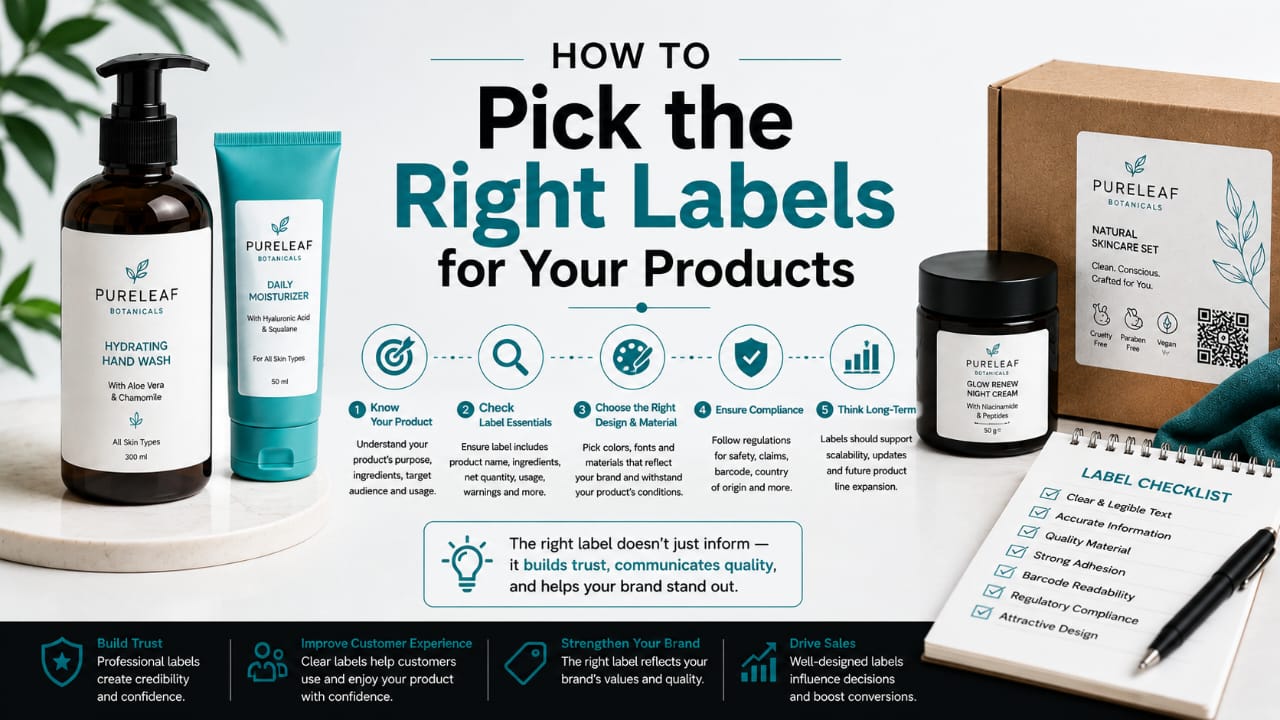
First, consider the product itself. We should label the products differently depending on where and how we will use them.
Think.
Will we keep the product in a refrigerator or frozen?
Will it be exposed to water, oil or chemicals?
Is this for indoor or outdoor use?
Will the product be a part of a lot in shipping or retail displays?
Your answers will dictate the material, adhesive and finish your label needs.
Select the Correct Label Material
Material plays a big role in both durability and looks.
Paper labels are also low cost and suitable for products we store in dry conditions. This makes them ideal for retail packaging and promotional items.
Film-based labels such as polypropylene (PP), polyethylene (PE) and polyester (PET) provide excellent protection against moisture, scratches, oil and chemicals. They are extensively used in the cosmetics, beverages, pharmaceuticals and industrial products industries.
Choosing the right material will ensure your labels stay looking great through the entire product lifecycle.
Choose An Adhesive That Suits Your Packaging
Not all adhesives are created equal. The type of packaging surface and storage conditions have an impact on the performance of a label.
Permanent adhesives are best for most consumer products, whereas removable adhesives are good for temporary labels or promotional stickers. Special-purpose adhesives are available for difficult surfaces such as glass, plastic, metal or frozen packaging.
The right adhesive can help prevent peeling, bubbling or lifting over time.
Clear Design And Readability Focus
A good product label is a balance between looks and functionality.
Ensure important details such as the product name, ingredients, instructions, manufacturing information, barcodes, and safety warnings are easy to read. Choose fonts that are legible even in small labels, and ensure that the text has sufficient contrast against the background.
A clean, professional design not only draws in customers but also builds trust in your brand.
Look at Industry Regulations
Many industries require businesses to comply with mandatory labelling requirements.
For instance:
- We must label food products with nutrition information and ingredient declarations.
- Cosmetics labels should have ingredients and directions for use.
- Pharmaceutical products usually need batch numbers, manufacturing dates, expiry dates and safety information.
Knowing the regulations that apply before you print can save costly reprints and compliance issues.
Consider Your Brand Personality
Your labels must always be consistent with your brand on all products.
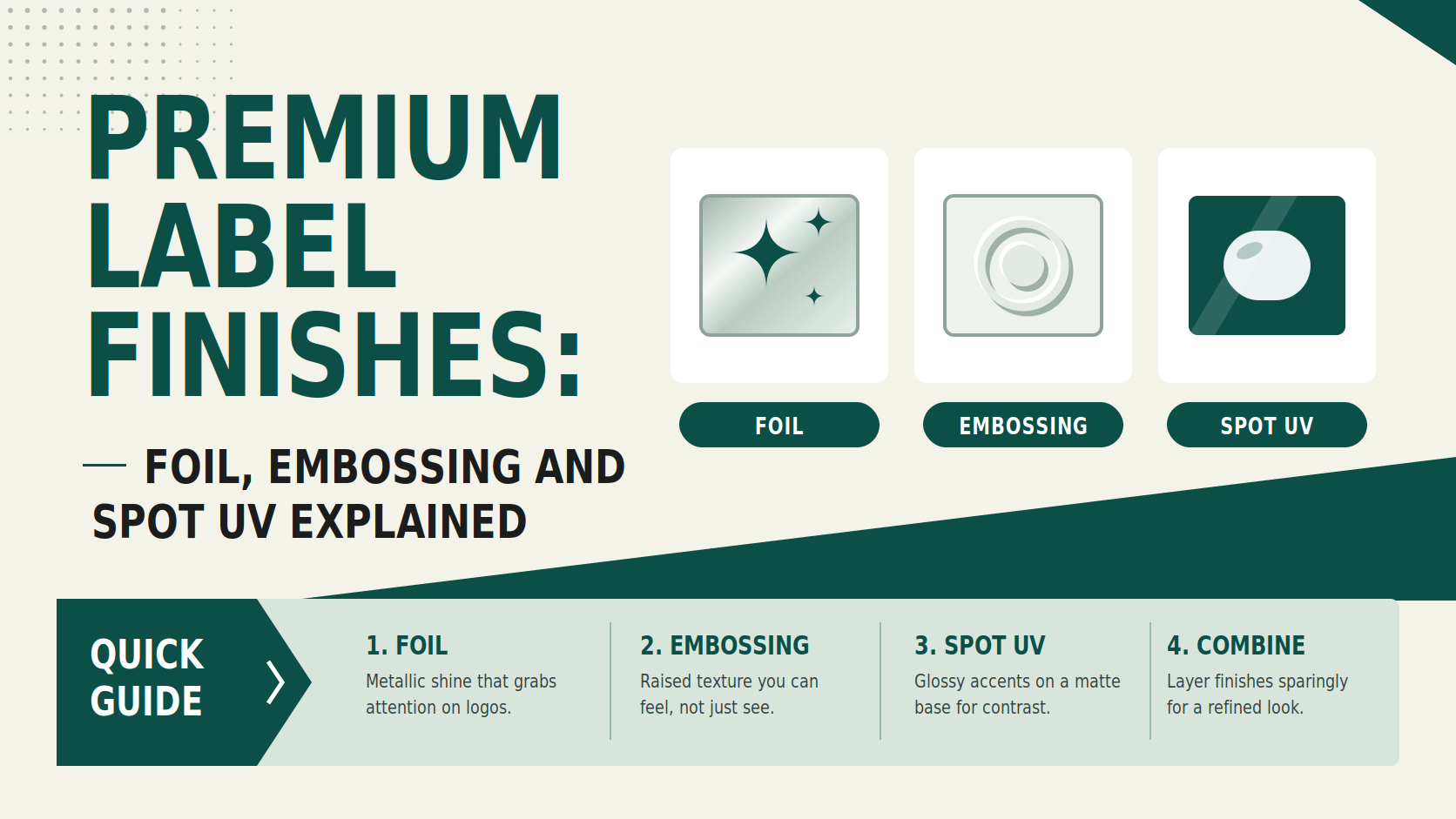
Using consistent colours, typography, logo placement and design style creates a cohesive identity that customers will recognise over time. Additional premium finishes including matte, gloss, textured or metallic effects can further add to the shelf appeal.
Partner with an Experienced Label
Poor printing quality can ruin a great design. A good label maker can advise on suitable materials, adhesives, finishes and print methods for your product, industry and budget.
Working with the right supplier means you’ll get the same high quality, on time delivery and labels that work as expected.
Summary
Right labels aren’t just pretty; they matter. Businesses should consider the product’s environment, label material, adhesive strength, compliance requirements, and overall branding strategy. You can invest in high quality custom labels that will protect your products, build your brand image and give your customers a better experience.
Frequently Asked Questions (FAQ)
-
How do I select product labels? What should I be looking for?
When choosing a label consider your product type, packaging material, storage conditions, durability requirements, industry regulations and branding needs.
-
Which is the best label material for moisture exposed products?
Film-based materials such as polypropylene (PP) and polyester (PET) are great options as they are resistant to water, oils and scratches.
-
What is the importance of adhesive in product labels?
The right glue guarantees that labels will stay attached to a wide variety of materials such as glass, plastic, metal or cardboard, even in difficult conditions.
-
Can custom labels improve my brand image?
Yes. Custom labels offer a professional appearance, increase brand awareness, convey key product details, and differentiate your products in a crowded marketplace.