Adhesive For Labels Matters: Permanent, Removable or Freezer-Grade, Which One Does Your Label Need?

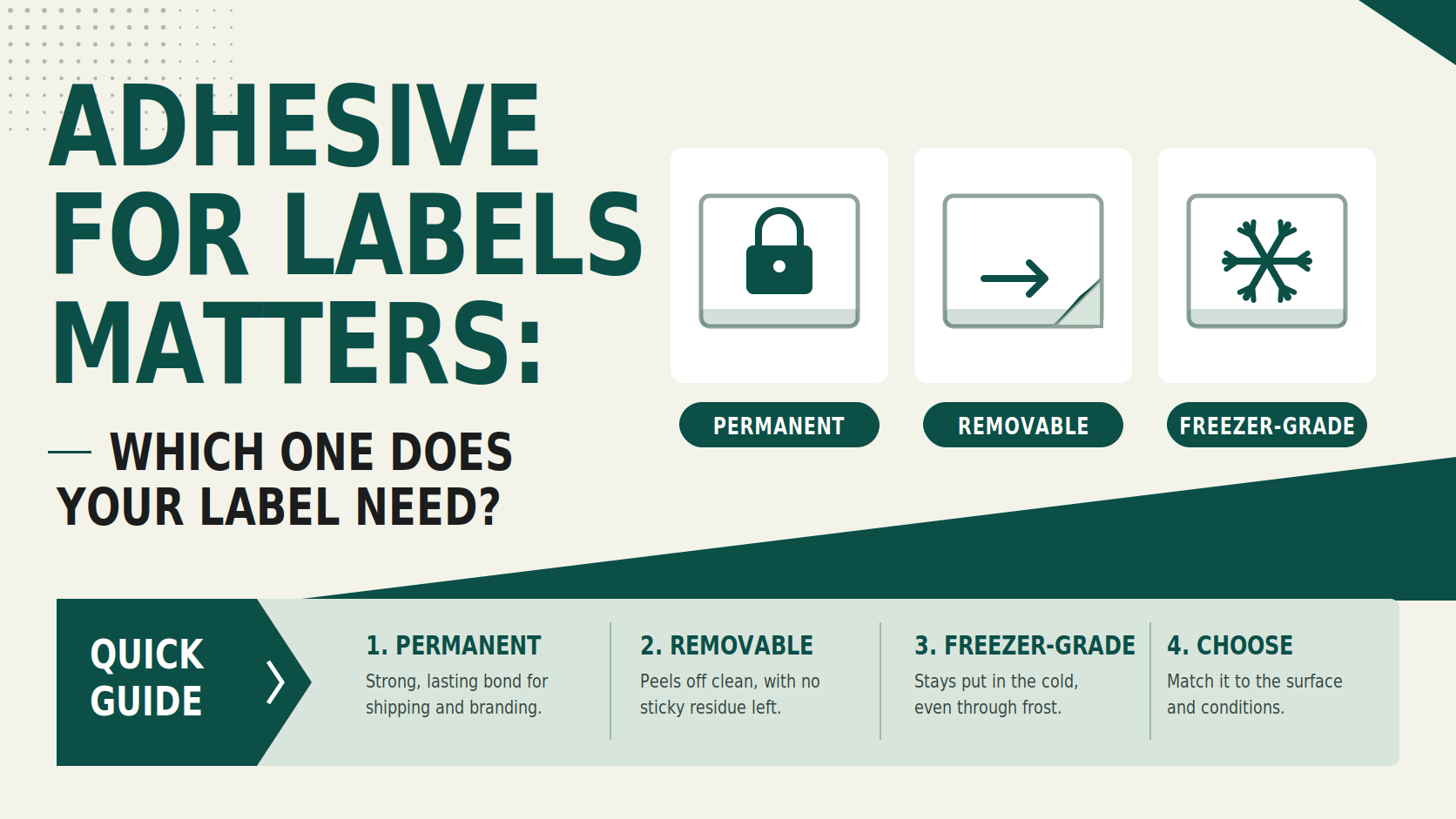
There are a number of adhesives available for labels. Using the right one ensures longevity as well as aesthetics. So, which adhesive for labels of your products will work the best? Use permanent adhesive when the label should stay on for life. You should use removable adhesive when the label should come off clean. Use freezer-grade adhesive when the label is applied or stored in the cold. Most peeling problems come from picking the wrong one, not from a bad label. Let’s learn in detail.
Why The Adhesive Matters As Much As The Label
People spend weeks on label design and a minute on adhesive. Then the label lifts at the corners, slides off a cold bottle or leaves a sticky mess behind.
The adhesive is the part that touches your pack. It has to match the surface, the temperature and the way the product is used. Get that right and the label looks good for its whole life.
Permanent Adhesive For Labels: Made To Stay
Permanent adhesive forms a strong bond that is meant to last. If you try to peel the label off, it will tear, or leave residue behind.
It suits most everyday products. Think of food jars, cosmetic bottles, supplement tubs and household packs. It also suits anything that must resist tampering, like batch codes or safety information.
The limit is temperature. A standard permanent adhesive works well at room temperature. It can struggle on cold or damp surfaces, which is where freezer-grade comes in.
Removable Adhesive For Labels: Made To Leave Cleanly
Removable adhesive holds firmly enough for its job, but lets go without damage. The label peels off in one piece and leaves little or no residue on a clean surface.
It suits price tags, promotional stickers, gift labels and anything temporary. Brands use it for “offer” labels on packs that should look clean afterwards.
There are two things to know. First, it holds less strongly, so it may lift on curved, rough or textured packs. Second, “removable” works best when the label is taken off within a reasonable time. Left for months, any adhesive can bond harder and leave marks.
Freezer-Grade Adhesive For Labels: Made For The Cold
Cold changes how adhesive behaves. A normal adhesive turns stiff and loses its grip. That is why labels pop off ice cream tubs, frozen food packs and chilled bottles.
Freezer-grade adhesive is built to stay sticky at low temperatures. It suits frozen foods, dairy, ice cream, meat, seafood and cold-chain pharma.
Here is a point many buyers miss. There are two temperatures to check. One is the application temperature, which is how cold the pack is when you stick the label on. The other is the service temperature, which is how cold the label can get once it is on. A label may survive in a freezer but still fail to stick if you apply it on a frozen pack. Ask for both numbers, as they vary by adhesive.
Condensation matters too. When a cold pack comes into a warm room, water forms on the surface. Labels for these packs need a face material and adhesive that handle moisture.
Quick Comparison
| Permanent | Removable | Freezer-grade | |
| Bond | Strong, lasting | Light to medium | Strong, even when cold |
| Peels off clean? | No | Yes, usually | No |
| Best for | Most retail packs | Price tags, offers, temporary labels | Frozen, chilled and cold-chain packs |
| Watch out for | Weak grip in the cold | Lifting on curved or rough surfaces | Higher cost than standard |
Match The Adhesive To Your Surface
The surface decides a lot. Glass and metal are smooth and easy to stick to. Plastics like PE and PP are harder because they repel adhesive. Textured, powdery or oily surfaces are harder still. Tight curves, such as small bottles and tubes, push labels to lift at the edges.
If your pack is plastic, curved or squeezable, tell your printer. A stronger, softer adhesive may be needed.
Also think about food safety. Labels usually sit on the outside of the pack, so contact with food is indirect. Even so, ask your printer for adhesive that is suitable for food packaging if your product is edible.
Common Adhesive Mistakes
The biggest one is testing at room temperature only. A label that sticks well on your desk can fail in a cold store.
The second is testing too early. Adhesive takes time to reach full strength, often a day or more. A label that looks loose in the first hour may be fine after a day, and one that looks fine at first may still fail later.
The third is choosing removable adhesive to save cost on a pack that really needs a permanent bond.
How To Test Before You Order
Ask for samples. Apply them to your real pack, on a clean and dry surface. If your product is stored cold, apply some labels cold, and keep them in the real storage conditions. Leave them for at least 24 to 72 hours. Then check the edges, the corners and the surface for lifting, bubbles or residue.
This small test costs very little. A failed bulk run costs a lot more.
Frequently Asked Questions
Can I use a normal permanent label in a freezer?
Usually not. Standard adhesive loses grip in the cold, so the label may curl or fall off. Use a freezer-grade adhesive, and check both the application and service temperatures.
Do removable labels leave residue?
Good ones peel off clean from smooth, dry surfaces. Residue is more likely if the label stays on for a long time, in heat or on a rough surface. Test on your own pack to be sure.
Why do my labels peel off plastic bottles?
Plastics like PE and PP have low surface energy, so many adhesives struggle to grip. Curved shapes and squeezing add stress. A stronger adhesive made for plastics usually fixes it.
How long does label adhesive take to reach full strength?
It builds over time. Many adhesives need around 24 to 72 hours to reach full bond. Don’t judge a label only by the first hour, and avoid handling or freezing packs too soon after application.
Not sure which adhesive your label needs?
Share your pack material, storage temperature and use with the Winways Digitech team. We will suggest the right adhesive and send samples to test on your own packs. Reach us through the contact page on our website.