
Most brands pick a label material by the look first. Glossy, kraft, clear, whatever fits the brand mood board. Then the product spends a week in a fridge, a warehouse, or a delivery van in peak summer, and the label fails. It peels. It fades. The barcode stops scanning. Label material is not simply a design choice. It is a functional spec. Getting it right protects the product and the print budget. Here is how BOPP, vinyl, and paper actually compare, and how to pick the right one.
BOPP: The Everyday Standard
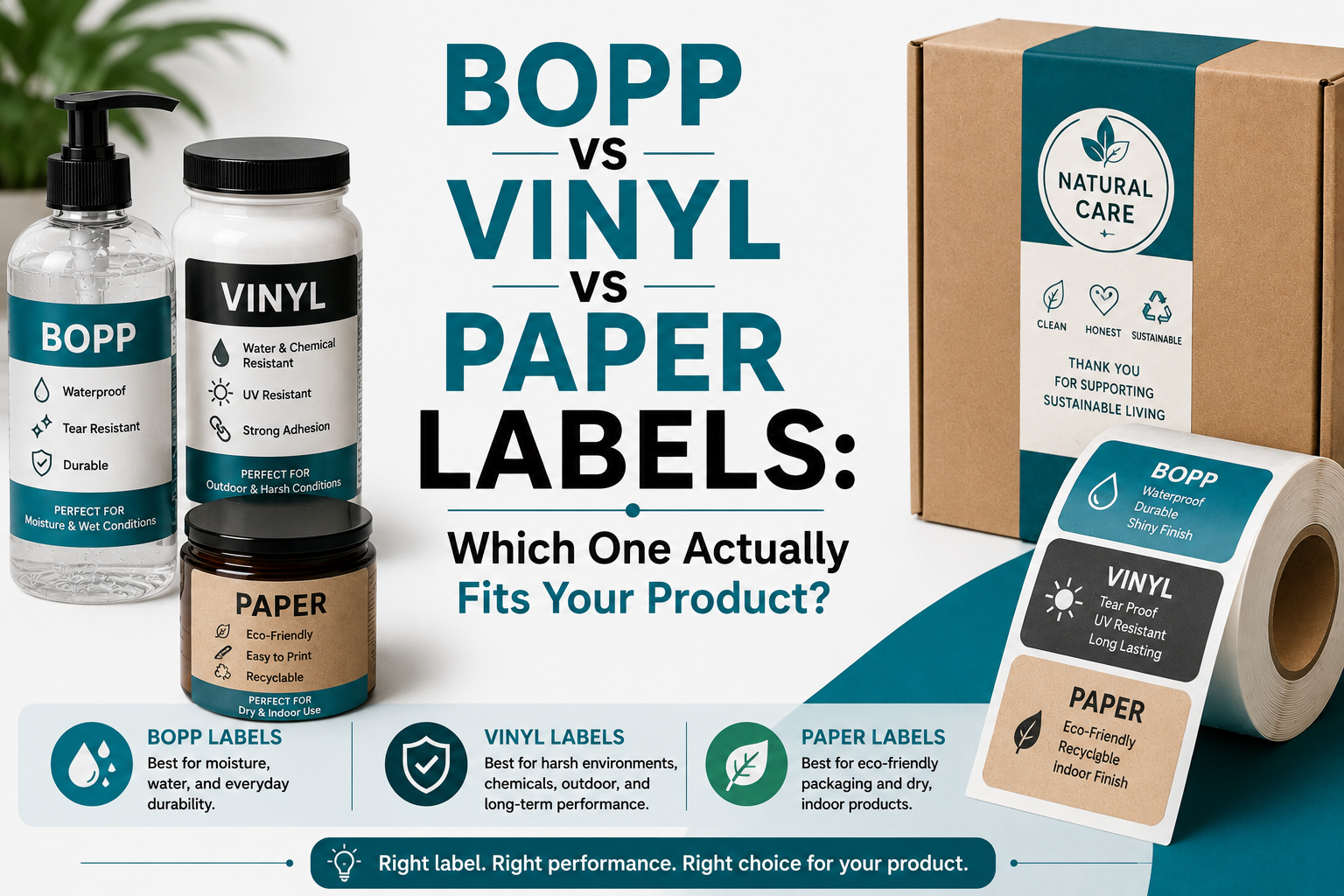
BOPP stands for biaxially oriented polypropylene. That is a plastic film stretched in two directions during manufacturing. The stretching makes it strong. BOPP labels are thin, tear-resistant, and stable in shape. They resist water and most oils. They also hold fine print well, so barcodes and small text stay sharp and scannable over time.
BOPP runs efficiently on both digital and flexo presses. That keeps the cost per label low, even at moderate order volumes.
This mix of strength, print quality, and cost is why BOPP has become the default label material for a wide range of packaged goods. Personal care, packaged food, and household products all use it heavily. If a product stays indoors and needs a label that looks the same on unit one and unit ten thousand, BOPP is usually the right starting point.
Vinyl: Built for Harsher Conditions
Vinyl labels are made from PVC. They are usually thicker than BOPP and more flexible. Vinyl also uses stronger adhesives, built to grip curved, textured, or uneven surfaces. That strength is what makes vinyl the right choice for products that don’t stay in controlled indoor spaces. Think outdoor equipment, automotive parts, or drums stored in a yard through monsoon and summer both.
Vinyl handles UV exposure, temperature swings, and rough handling better than either BOPP or paper. That performance comes at a price. Vinyl costs more than BOPP, both in raw material and in the heavy-duty adhesive it needs. That extra cost is worth it when a label truly needs to survive years outdoors. It is wasted money when the product it protects never leaves an indoor shelf.
Paper: Still the Right Call for Some Products
Paper is the oldest label material, and it still earns its place. It costs less than BOPP or vinyl by a clear margin. It also takes texture and colour beautifully. Kraft, matte, and textured paper stocks often look more premium than film, especially for brands built around a natural or sustainable story.
The trade-off is durability. Uncoated paper has almost no resistance to moisture. Even coated paper will eventually lose adhesion or clarity in humid or wet conditions. For dry goods, indoor retail items, and products with a short shelf life, that trade-off rarely matters. For anything refrigerated, anything exposed to condensation, or anything handled with wet hands, it matters immediately.
How to Choose
Ask three questions in order.
Where does this product live after it leaves the factory?
What does the label need to survive?
For how long?
A dry snack sitting on a shop shelf for a few months has very different needs than a cleaning spray stored in a garage, or a drink that lives in a cooler. Matching the material to the environment is not the cautious choice. It is the cost-efficient one. Choosing vinyl for an indoor product wastes margin. Choosing paper for a refrigerated one leads to reprints, damaged brand image, and in regulated categories, real compliance risk if batch or ingredient details become unreadable.
Getting this right at the sourcing stage costs far less than fixing it after a production run has already shipped.
FAQs
Which label material is most cost-effective for high-volume orders?
BOPP is usually the most cost-effective choice at volume. It runs efficiently on digital and flexo presses. It needs less material thickness than vinyl to perform well. And it avoids the reprint costs that come from picking paper for an environment the product cannot handle.
Are BOPP labels actually waterproof?
Yes, in practical terms. BOPP film does not absorb moisture, warp, or fall apart the way paper does. What can vary is adhesive performance under long submersion or extreme temperature swings. That is where vinyl’s heavier-duty adhesive takes over for genuinely harsh conditions.
Is vinyl overkill for a typical indoor product?
In most cases, yes. Vinyl’s extra cost pays for adhesion and toughness that indoor products rarely need. Unless a product goes outdoors, into industrial handling, or into long-term storage in changing conditions, BOPP gives similar everyday durability at a lower price.
Which label material is easier to recycle?
Paper is the more straightforward option to recycle or compost. It is also the material most linked with natural or eco-forward branding. BOPP can be recycled too, but only through facilities that meet current plastics-recycling standards, and it does not biodegrade. Brands making sustainability claims should confirm certification rather than assume it.