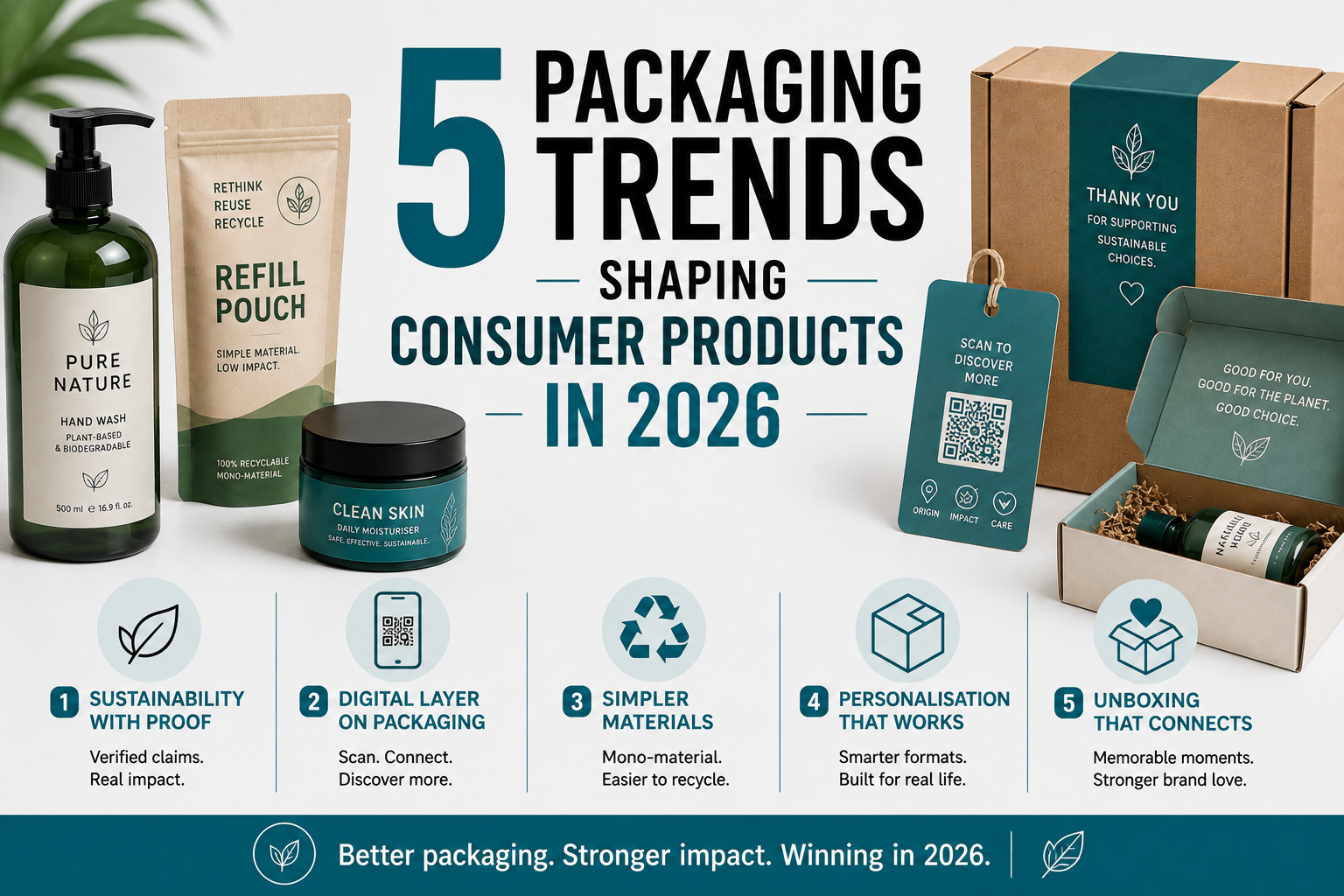

Packaging used to be simple. It protected the product and showed the brand name. That job has changed. In 2026, packaging carries claims, data, and expectations. Buyers check those claims before they trust a product. Regulators check them too. Here are five packaging trends that matter this year, and why each one is more than a design ideology.
Sustainability Claims Need Proof Now
For years, the word eco-friendly did most of the work. That is no longer enough. Buyers have grown sharper about greenwashing. Regulators have caught up as well. These developments tie real fees to how recyclable a package truly is, not how recyclable it claims to be. This changes the game. Brands now need certifications, lifecycle data, and clear material breakdowns. A green leaf icon on a box no longer builds trust on its own. Verified claims do.
Packaging Now Carries a Digital Layer
QR codes had a short moment during the pandemic, mostly on restaurant menus. They are back, and this time they do more work. Scan a package today, and you might see sourcing details, a digital product passport, or a loyalty offer. Some brands use embedded sensors for smarter inventory tracking. Others use scan data to trigger content based on location or time. Packaging is no longer a static label. It has become an active surface that responds to the buyer.
Materials Are Getting Simpler, Not Fancier
For a long time, circular economy conversations focused on using less plastic overall. The conversation has sharpened. The real shift now is toward mono-material design. That means one recyclable material per package, instead of the plastic-foil-paper blends that made recycling nearly impossible. Mono-material packaging moves cleanly through recycling systems. It also tends to cost less, since simpler materials are easier to source and process. Expect fewer decorative layers this year. Expect more packaging built to break down cleanly once its job is done.
Personalisation Is Becoming Practical, Not Just Pretty
Personalised packaging used to mean a printed name on a bottle for a short campaign. That idea has grown up. In 2026, personalisation means packaging built around how people actually use a product. Think travel-sized refill pouches. Or, skincare packs split into single-use doses for a week. And, modular formats that adjust to portion size. It is about function finally matching real behaviour.
Unboxing Has Become Part of the Brand Experience
E-commerce changed where a product first meets its buyer. It is no longer a store shelf. It is a doorstep. That shift along with heavy social media usage has turned unboxing into a real part of brand strategy, not an afterthought from the shipping team. Brands now design textured inserts, satisfying closures, and a sequence of small reveals meant to be filmed and shared online. It sounds like a small detail. But for many buyers, that unboxing video is their only in-store experience with the brand.
Together, these five shifts point to one idea. Packaging no longer just holds a product. It builds a case for it, on sustainability, on convenience, and on experience. Brands winning in 2026 are not spending more on packaging. They are spending more carefully on the details their buyers actually notice.
FAQs
What is the biggest packaging trend in 2026?
Verified sustainability is the trend with the most weight this year. Packaging backed by certifications and real lifecycle data now matters more than vague eco-claims.
Why is mono-material packaging becoming more common?
Mono-material packaging uses one recyclable material instead of mixed layers. This makes it far easier for recycling systems to process correctly. It also solves a cost problem, since simpler materials are usually cheaper and faster to source.
How is digital technology changing packaging design?
QR codes, embedded sensors, and digital product passports are turning packaging into an interactive layer. Brands use this to share sourcing details, extend their story, and collect data on how and when a product gets used.
Does sustainable packaging cost more for brands?
It can, especially at first. But the gap is narrowing. Regulatory fees are increasingly tied to recyclability, so unsustainable packaging is starting to cost more too, through compliance penalties and extended producer responsibility charges.