
Your product label is frequently the first interaction a customer has with your brand. A good design can catch attention, but a poorly planned label can confuse buyers, damage your brand’s reputation, or even create compliance problems. If you’re creating a new product or refreshing your packaging, steer clear of these typical labelling mistakes to save yourself time, money and the hassle of reprints.
If you’re designing and printing product labels for your business, here are five mistakes you need to avoid.
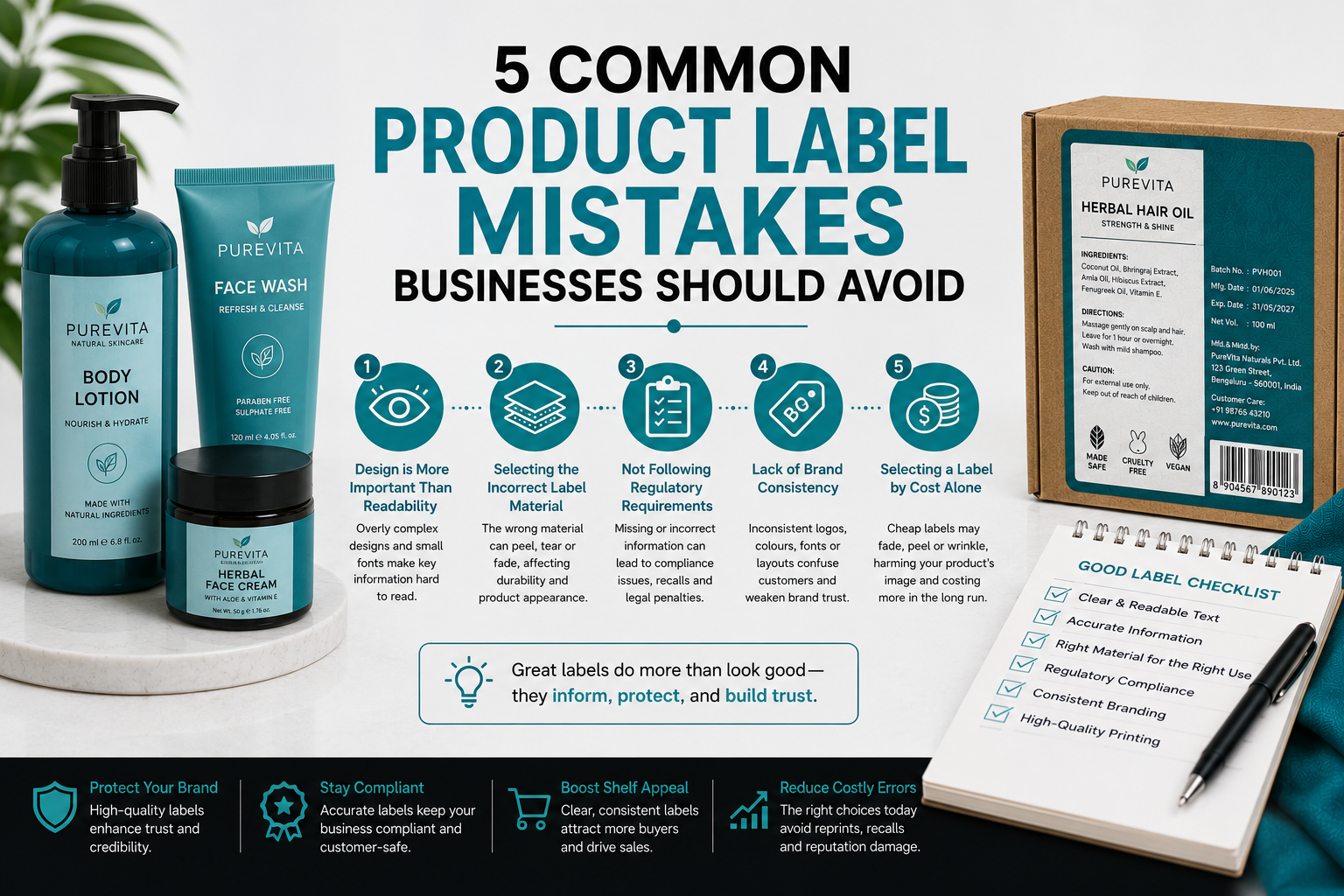
Design is More Important Than Readability
A striking label is important but should never come at the expense of clarity. Important information can be hard to read if there is too much decoration, layouts are crowded, or colour contrast is poor.
The product name, key features, ingredients, directions for use and other important information should be easy for customers to find. A clear design with legible type will enhance the customer experience and also demonstrate professionalism.
Tip: Keep your design simple, use readable font sizes and leave enough white space so you don’t have visual clutter.
Selecting the Incorrect Label Material
Not every label is right for every product. A paper label may be a good choice for a dry retail product, but it can peel, tear or fade when it comes in contact with moisture, refrigeration, oils or chemicals.
Similarly, products that are stored outdoors or transported over long distances require durable materials to withstand changing conditions.
The choice of the material, be it paper, polypropylene (PP), polyethylene (PE) or polyester (PET), will help to preserve functionality and appearance throughout the life of the product.
Tip: Before you choose label materials, think about where and how your product will be stored, shipped and used.
Not Following Regulatory Requirements
A lot of industries have mandatory labelling guidelines for consumer protection and transparency.
Depending on the product category labels may need to include:
- Ingredients or formulation
- Manufacturing and expiry dates
- Lot number or batch number
- How to use it
- Safety cautions
- Information from manufacturer
- Regulatory symbols or barcodes
If information is missing or inaccurate, it can result in rejected shipments, product recalls and legal problems.
Tip: Before approving artwork for printing, consult the industry expert for any particular labelling requirements.
Lack of Brand Consistency
Every single label is a reflection of your brand. Inconsistent colours, logos, fonts or layouts between different products can make your brand look unprofessional and hard to recognise.
Branding leads to familiarity and trust. Consumers should immediately associate the packaging with your brand, regardless of the marketplace they come across your products in.
Tip: Develop explicit brand guidelines and stick to them across your product lines.
Selecting a Label by Cost Alone
Saving on packaging by going for the cheapest labels can be an expensive mistake in the long run. Poor quality labels have a tendency to fade, peel, wrinkle or lose adhesion, which can affect the appearance of your product and how customers perceive it.
Quality materials and professional printing ensure your labels will not only withstand transportation, storage and display in retail but they will also put your brand in the best possible light.
Tip: Don’t just think about the printing cost; consider the long-term value.
Why The Right Label Partner Is Important
Quality manufacturing can’t be replaced by a great label. A knowledgeable label printing partner can recommend the correct materials, adhesives, finishes and printing processes based on your product, package and industry needs.
Working with experts also helps cut down on expensive errors, boost production efficiency and guarantees uniform quality with every batch.
Conclusion
Working product labels combine a good look, durability, accurate information and strong branding. Businesses can create labels that safeguard their products and foster customer trust and sustainable brand growth by sidestepping common pitfalls like poor readability, unsuitable materials, regulatory non-compliance, inconsistent branding, and inferior printing.
Taking the time to get your labels right today can mean better shelf appeal, better customer experiences and less production challenges tomorrow.
Common Questions
- What is the most common product label error?
One of the most frequent mistakes is to prioritise design over readability, making it hard for customers to understand significant product information.
- Why is it important to choose the right label material?
The label can withstand moisture, heat, refrigeration, handling and transportation without peeling, fading or tearing, given the right material.
- What must all product labels contain?
Labels should include the product name, details of the manufacturer, ingredients, usage instructions, batch number, manufacturing and expiry dates, safety information and barcodes where applicable depending on the industry.
- How can companies make their product labels better?
To get high-quality results, businesses should use durable materials, have consistent branding, ensure regulatory compliance, prioritise readability, and partner with a reliable label printing company.